
What are smart ways to save money on groceries: Without Sacrificing Good Food
Grocery prices have not been kind to American households lately. Food-at-home costs climbed roughly 25 percent between 2020 and 2025, what are smart ways to save money on groceries? And even with inflation cooling to around 2.8 percent a year, most families still feel the pinch every time they hit checkout. A single adult now spends somewhere between $335 and $550 a month depending on age and diet, and a family of four on a moderate USDA food plan is looking at $1,250 to $1,400 a month just to eat at home.
The good news is that grocery bills are one of the few big expenses you actually have daily control over. You cannot negotiate your rent every week, but you can absolutely change what goes in your cart. This guide walks through the smart ways to save money on groceries that actually move the needle, not the generic advice you have already heard a hundred times.

Why Your Grocery Bill Feels So Much Higher Than It Used To
It is not just you. Grocery inflation has outpaced general inflation for most of the past five years. A household that comfortably spent $700 a month on groceries in 2019 is now structurally facing closer to $875 or more for that exact same basket, even without buying a single extra item.
On top of rising prices, the average American also wastes about 325 pounds of food a year. For a family of four, what are smart ways to save money on groceries? that works out to roughly $1,500 in food that gets tossed instead of eaten, according to USDA and EPA cost-of-food-waste research. Between higher prices and wasted food, a lot of families are bleeding money without realizing exactly where it is going.
That is actually good news, because it means there are two separate levers you can pull. You can spend less per item, and you can waste less of what you buy. Most of the tips below hit one or both of those levers.
Start With a Weekly Meal Plan
Meal planning is the single habit that saves the most money over time, and it is the one people skip most often because it feels like extra work.
A weekly meal plan does not need to be complicated. Pick five to seven meals, check what you already have, and build your grocery list around those meals instead of wandering the store hoping for inspiration. When you shop without a plan, what are smart ways to save money on groceries? you tend to buy random items that do not combine into full meals, and a chunk of it ends up forgotten in the fridge.
How to Build a Simple Weekly Meal Plan
- Choose two or three meals that repeat ingredients, what are smart ways to save money on groceries? like a roast chicken one night and chicken tacos two nights later using the leftover meat.
- Plan one “clean out the fridge” night where you use up whatever vegetables or proteins are close to their expiration date.
- Build in one no-cook or leftovers night so you are not tempted to order takeout when you are tired.
- Match your plan to what is already on sale that week rather than deciding on a recipe first and paying full price for every ingredient.
Once your meals are set, checking your pantry inventory before you shop becomes much more useful. Open the fridge, freezer, and pantry, and write down what you already have on hand. This single step prevents the classic mistake of buying a third jar of peanut butter because you forgot the other two were in the cabinet.
Make a Grocery List and Actually Stick to It
A grocery list sounds obvious, what are smart ways to save money on groceries? but the real skill is discipline once you are inside the store. Retailers design layouts specifically to encourage impulse purchases. Bright end-cap displays, snacks near the checkout line, and “buy one get one” signs are placed to pull your eyes away from your list.
Try shopping the perimeter of the store first, where fresh produce, dairy, meat, and bread usually live, then move into the center aisles only for the specific packaged items on your list. This naturally reduces exposure to the processed snack aisles where impulse spending tends to happen.
If you shop with a phone, keep your list in a notes app or a shared list with your household so nobody doubles up on the same items. Digital lists also make it easy to check off what you already grabbed, what are smart ways to save money on groceries? which cuts down on backtracking through the store.
Compare Prices the Right Way
Comparing grocery prices is not about memorizing every price at every store. It is about learning to compare using unit price, not shelf price.
Use Unit Price Comparison
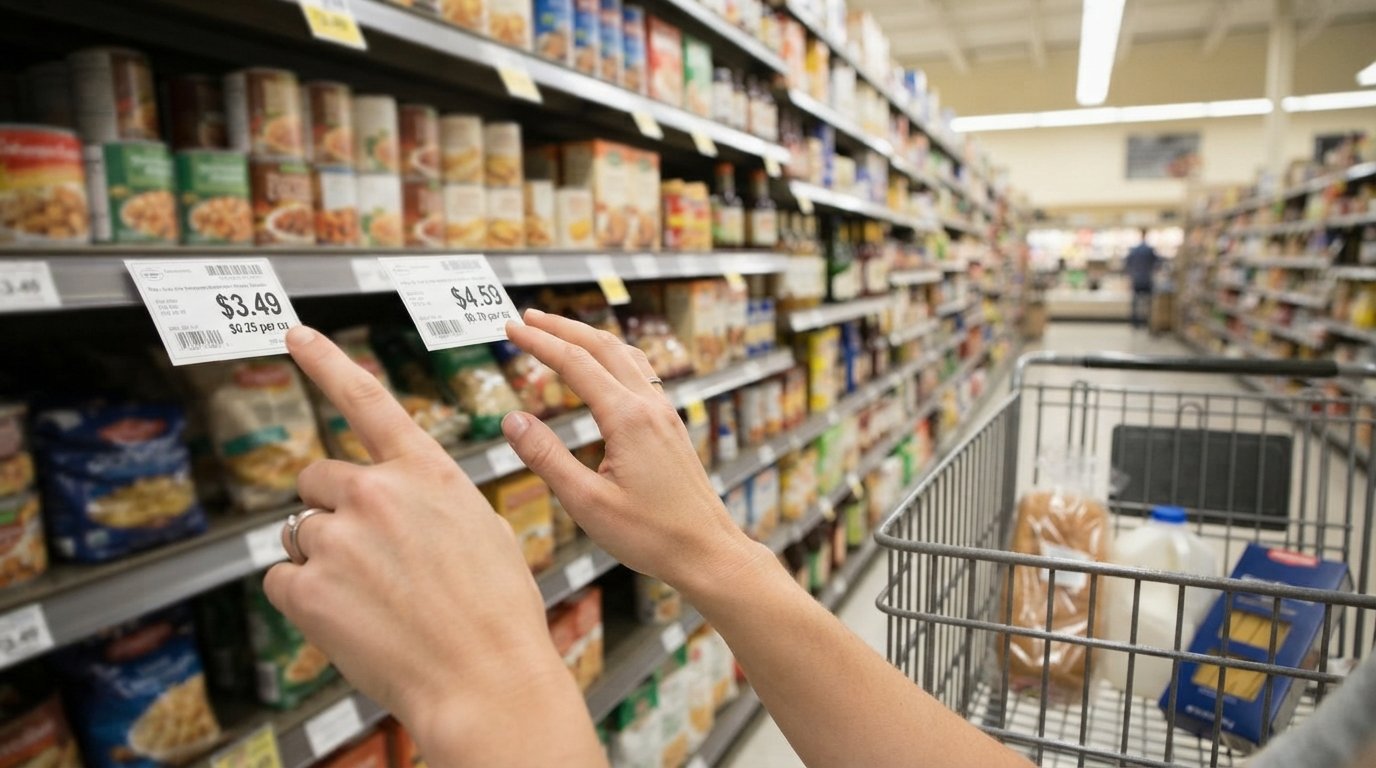
Every grocery store shelf tag includes a unit price, usually listed as cost per ounce, per pound, or per count. This is the number that actually tells you which product is the better deal, because package sizes vary so much between brands.
A 24-ounce jar of pasta sauce for $3.99 and a 16-ounce jar for $2.99 look similar at a glance, but the unit price shows the larger jar is actually cheaper per ounce. Get in the habit of glancing at that small number on the shelf tag before comparing sticker prices.
Compare Prices Across Stores Without Wasting Time
You do not need to drive to five different stores every week to save money. Instead, pick one or two stores that consistently run lower on your regular items, and reserve trips to a warehouse club or discount grocer for bulk staples only. Many shoppers find that splitting purchases between a discount grocer like Aldi and a regular supermarket for sale items gives most of the savings without the wasted gas and time of chasing every deal.
Grocery price comparison apps and store apps have also gotten much better at showing weekly ads before you leave home, so you can plan your list around what is actually discounted that week rather than guessing.
Use Coupons and Store Loyalty Programs the Smart Way
Coupons still work, but the old habit of clipping paper coupons for items you would not normally buy is a losing strategy. It leads to spending money to “save” money on things you did not need.
The better approach is to only use coupons and digital offers for items already on your list. Most major grocery chains now run loyalty programs that load digital coupons directly onto your account and automatically apply discounts at checkout. These store loyalty programs also often unlock member-only sale prices, fuel points, or cash-back rewards that are not available to non-members and cost nothing to join.
Cash-back grocery apps are worth setting up once and then using passively. You scan your receipt or link your loyalty card, and the app tracks rebates on items you were already planning to buy. Over a year, what are smart ways to save money on groceries? these small rebates can add up to a meaningful discount without changing your shopping habits at all.
Buy Generic and Store Brands
Store brands and generic brands have closed the quality gap significantly over the past decade. Many store-brand products, especially pantry staples like flour, what are smart ways to save money on groceries? canned vegetables, pasta, and spices, are made in the same manufacturing facilities as name brands, just packaged differently.
A good rule of thumb is to try the store brand version of pantry basics and canned goods first, since the difference is rarely noticeable. For items where taste or texture matters more to your household, like cereal or ice cream, test one box of the store brand before fully switching so you are not stuck with something nobody wants to eat.
Switching just your staple items, things like rice, oats, flour, canned tomatoes, and dish soap, to store brands can cut your total bill by 15 to 25 percent on those categories alone, since name brands often charge a premium purely for marketing rather than ingredients.
Shop Seasonal Produce
Seasonal produce is one of the most overlooked ways to save on food. Fruits and vegetables cost less when they are in season locally, because farms have more supply and shipping distances are shorter.
Buying strawberries in December means they likely traveled a long distance and cost more per pound than they would in June. Building your meals around what is currently in season, what are smart ways to save money on groceries? and freezing extra when prices dip, keeps your produce spending down while still eating fresh food.
Frozen fruits and vegetables are also worth normalizing in your routine. They are typically flash-frozen at peak ripeness, which means the nutrition is comparable to fresh, the price is usually lower, and there is zero spoilage risk sitting in your crisper drawer.
Buy in Bulk, But Only the Right Items
Buying in bulk can genuinely reduce your per-unit cost, what are smart ways to save money on groceries? but only when you buy items you will actually use before they go bad or expire.
Non-perishables like rice, dried beans, canned goods, paper products, and pasta are ideal bulk purchases because they store for a long time. Meat is another good bulk category, since you can portion and freeze it the same day you buy it.
Where bulk buying backfires is fresh produce and dairy. A five-pound bag of spinach for a household of two almost never gets finished before it wilts, which means you paid less per ounce but still lost money overall because half of it went in the trash. Before buying anything in bulk, ask yourself honestly whether your household will realistically eat or use the whole quantity within its shelf life.
Reduce Food Waste to Stretch Every Dollar Further
Food waste reduction deserves more attention than it usually gets in grocery savings advice, because it directly affects money you have already spent. The USDA estimates that 30 to 40 percent of the entire food supply in the United States goes to waste, and a large share of that happens inside people’s homes.
Simple Habits That Cut Food Waste
- Store produce properly. Leafy greens last longer wrapped in a slightly damp paper towel, and most fruit lasts longer in the fridge than on the counter once ripe.
- Freeze extra food before it turns. Bread, meat, cooked grains, and even milk can be frozen in portions instead of thrown out.
- Use leftovers intentionally. Plan a “leftovers night” into your weekly meal plan instead of letting containers pile up until they are forgotten.
- Label and date anything you freeze so it does not become a mystery container six months later.
- Practice first in, first out. Move older groceries to the front of the fridge and pantry so they get used before newer purchases.
Reducing food waste is essentially free money. You already paid for that food once, so every meal you make from leftovers or freezer stock is a meal you are not paying full price for again.
Avoid Convenience Foods When You Can
Pre-cut vegetables, individually packaged snacks, and ready-made meals cost significantly more per serving than the same ingredients bought whole and prepared at home. You are paying for the labor and packaging, not just the food.
This does not mean convenience foods are off limits. A busy week might genuinely call for a rotisserie chicken or a bag of pre-washed salad. The key is being intentional about when convenience is worth the premium, rather than defaulting to it out of habit every single trip.
Cooking at home in general remains one of the biggest cost advantages available to any household. Restaurant and takeout spending in the U.S. averages well over $3,000 a year per household, and even a modest shift toward home-cooked meals a few extra nights a week can free up real money for the grocery budget.
Try Bulk Meal Prep
Bulk meal prep is different from bulk buying. It means cooking larger batches of a few meals at once, then portioning and freezing or refrigerating them for the week.
Cooking a large pot of chili, a tray of roasted vegetables, or a batch of grains uses your oven and stove more efficiently, since you are not running them repeatedly for small meals throughout the week. It also reduces the temptation to order delivery on nights when you are too tired to cook, because a ready meal is already sitting in the fridge.
Batch cooking pairs well with buying in bulk, since the same five pounds of chicken thighs that would go bad sitting whole in the fridge can instead be cooked into two or three different freezer-ready meals.
Set and Track a Grocery Budget
A weekly or monthly grocery budget only works if you actually track it. Set a realistic number based on your household size and typical spending, then check your receipts against it every week or two.
Apps that link to your bank account or simple spreadsheet tracking both work fine. What matters is catching overspending early instead of discovering it at the end of the month. If you consistently go over budget, look at where the overage is coming from. It is often convenience foods, eating out disguised as a grocery trip, or impulse purchases near the checkout line rather than the planned meals themselves.
Common Grocery Shopping Mistakes That Quietly Cost You Money
- Shopping while hungry, which reliably leads to buying more food than planned, especially snacks.
- Going to the store without a list and relying on memory.
- Ignoring unit prices and assuming the bigger package is automatically cheaper.
- Buying specialty ingredients for a single recipe that then sit unused in the pantry.
- Letting produce go unused because it was bought without a specific meal in mind.
- Skipping the pantry check and buying duplicates of things you already own.
- Treating every “sale” sign as a genuine discount without checking the actual price against what you normally pay.
Frequently Asked Questions
The Bottom Line
What are smart ways to save money on groceries? is less about extreme couponing and more about a handful of consistent habits. Plan your meals before you shop, check your pantry so you are not buying duplicates, compare unit prices instead of sticker prices, lean on store brands for staples, and take food waste seriously since it represents money you already spent.
None of these changes require sacrificing good food or spending hours clipping coupons every weekend. Pick two or three habits from this list, build them into your routine for a month, and check your receipts against your old spending. Most households find the savings add up faster than they expected, and the habits get easier the longer they stick.
Sources
- USDA Food and Nutrition Service, Cost of Food Reports (2026)
- USDA Economic Research Service, Food Loss and Waste FAQs
- U.S. Environmental Protection Agency, Estimating the Cost of Food Waste to American Consumers
- Bureau of Labor Statistics, Consumer Expenditure Survey