
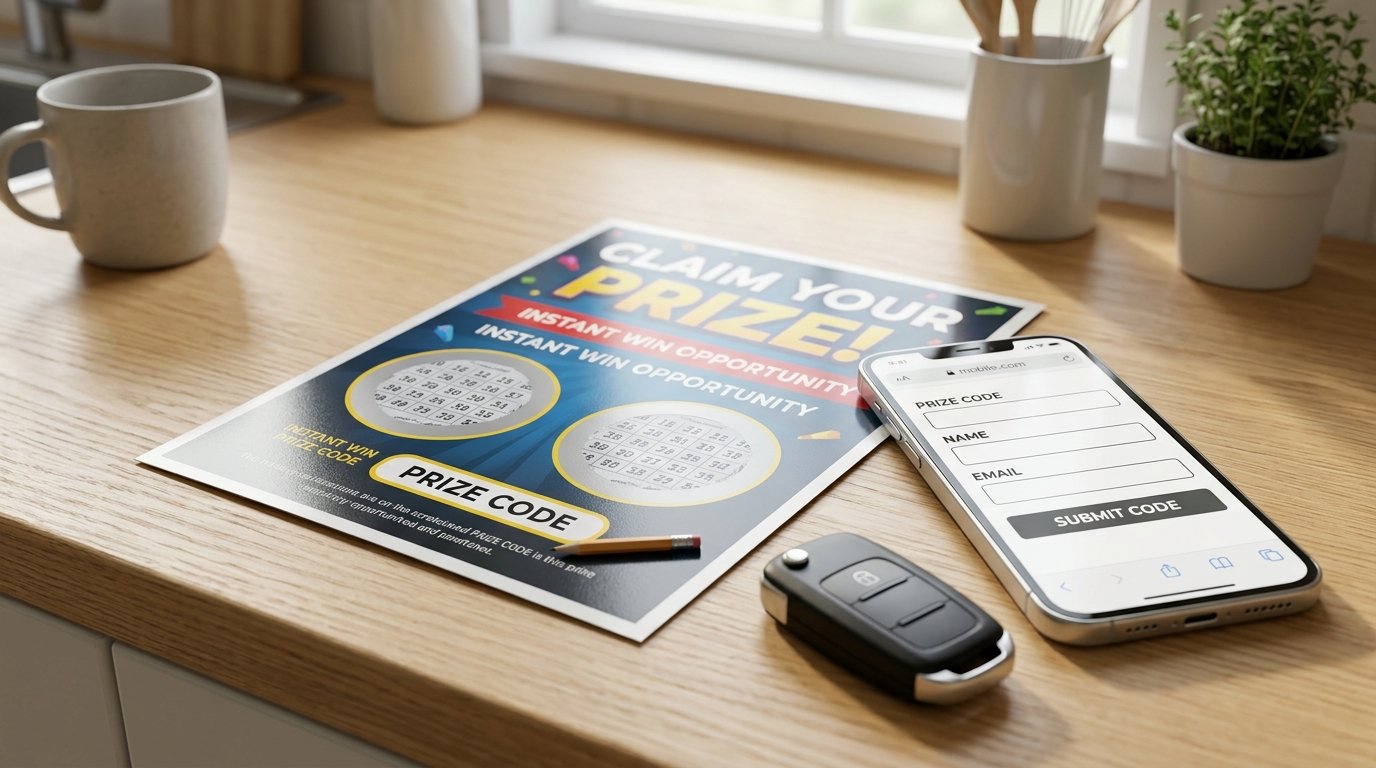
If you received a glossy mailer promising a cash prize, a car, or a gift card, and it sent you to prizechecker.com to enter a code, you are not alone in wondering whether it is real. Searches for “prizechecker.com legit” and “prizechecker.com scam” have grown because people keep running into the same pattern. This guide explains what the site appears to do, what regulators have said about similar mailers, and how to protect yourself.
Quick Answer: Is Prizechecker.com a Scam?
Prizechecker.com is best described as a tool in a deceptive marketing funnel rather than a genuine prize service. The public evidence points to a pattern where a mailer promises a win, a web page asks you to enter a code, and the “prize” turns out to be far smaller than advertised or tied to a visit to a car showroom. Some third-party reviewers go further and describe subscription traps, but those claims are harder to verify independently.
So the honest answer is that you should treat it as untrustworthy. You should not enter personal details, pay any fee, or assume a prize is waiting for you.
How the Prizechecker Mailer Scheme Typically Works
Most people first encounter this through the mail. The piece looks like a lottery scratch-off or a matching game. You pull tabs, match symbols, or scratch a panel, and it appears you have won cash, a television, or a vehicle.
The steps usually follow a predictable sequence:
- The mailer arrives from a local car dealership or a marketing company working for one.
- You are told to verify the win by calling a number or visiting a website and entering a confirmation code or PIN.
- The web page confirms a “win” but gives few details about the actual prize.
- You are directed to the dealership, where the prize is claimed in person.
- At the showroom, the prize may turn out to be a small amount, a gift card, or a spin on a wheel. Staff often steer the conversation toward buying or leasing a car.
Reports from consumers in several states describe this same sequence. In one Charlotte case, a mailer that appeared to promise $5,000 led to a $5 prize once the buyer arrived at the dealership. The dealer said the promotion had been vetted and was not a scam, but the buyer described the experience as misleading.
What Regulators Have Said About Similar Mailers
Prizechecker.com has not been named in the enforcement actions I found. However, the dealership prize mailer model it appears to support has drawn significant scrutiny.
In December 2024, a group of ten car dealerships and their parent company agreed to pay $20 million to settle a case brought by the Federal Trade Commission and the state of Illinois. The complaint alleged, among other things, illegal prize mailers, undisclosed junk fees, and phony online reviews.
State attorneys general have pursued similar cases. Indiana sued a marketing company over mailers that offered a $5,000 prize even though the game piece had no bearing on whether anyone won. Oregon’s Department of Justice investigated a dealership over scratch-off style mailers and later secured restitution for hundreds of consumers. Kansas fined several dealerships for mailings that failed to disclose the prize value and the odds of winning as state law requires.
These cases show a consistent theme. The problem is rarely a prize that never existed. The problem is the gap between what the mailer promises and what the consumer actually receives.
Red Flags to Watch For
You do not need to rely on a single review to spot trouble. These warning signs apply to prizechecker.com and to many similar offers.
- You do not remember entering anything. Legitimate sweepstakes are usually tied to a contest you chose to enter.
- The mailer came in bulk rate. Large prize notifications rarely arrive as bulk mail.
- You must visit a showroom to collect. A real prize rarely requires a sales pitch first.
- The prize value is hidden or vague. Watch for language about “up to” amounts or prizes that depend on a confirmation code you cannot read in advance.
- You are asked to pay. Any fee for taxes, shipping, insurance, or processing before you receive a prize is a strong sign of fraud.
- You feel pressure to act now. Urgency is a common tactic in prize scams.
The Federal Trade Commission has long advised that pressure to act quickly before you miss out is itself a warning sign. You can read more about sweepstakes and prize scams in the Wikipedia overview of sweepstakes.
Is Prizechecker.com Safe to Use?
Safety depends on what you share. Entering a code from a mailer may seem harmless, but the page may collect your name, address, email, and phone number. Those details can be sold or used for follow-up sales calls and mail.
If you already entered information, you can take a few steps:
- Watch your bank and card statements for unfamiliar charges.
- Enable alerts with your bank for transactions above a small threshold.
- Consider a credit freeze if you shared a Social Security number or other identity data, which you should never do for a prize claim.
- Block or ignore future mail from the sender.
- Report the mailer to your state attorney general and to the Better Business Bureau’s Scam Tracker.
How to Check Any Prize Before You Act
You can apply the same process to any prize offer, not just this one.
- Look up the company name along with the words “complaints” and “scam” in a search engine.
- Check the Better Business Bureau profile for the business running the promotion.
- Read the official rules. Legitimate contests publish eligibility, prize values, and odds.
- Verify the sponsor independently. Call a phone number you find yourself, not one printed on the mailer.
- Ask a simple question. If you cannot get a clear answer about the prize value and any costs, walk away.
The Better Business Bureau also warns that scammers often copy the names of trusted organizations. A mailer that looks official does not prove the offer is genuine.
Common Mistakes People Make
Many people lose time or information in the same few ways. Some assume that a website with a professional design must be legitimate. Others assume that because a local dealership sent the mailer, it must be safe. Dealerships can be real businesses and still run misleading promotions.
Another common mistake is treating a visit to the showroom as a small price to pay. The visit often becomes a long sales presentation, and the prize may be a minor incentive to get you through the door.
Finally, some people share sensitive data early because the first step seems harmless. The safest approach is to stop at the first sign that the prize requires you to visit, pay, or disclose more than necessary.
Frequently Asked Questions
Final Takeaway
Prizechecker.com is not a prize service you should trust with your time or information. The warning signs match a widely documented pattern in which mailers overstate what consumers can win and send them to a showroom. Before you enter a code, check the sponsor, read the rules, and ask what it will actually cost you. If the answer is unclear, the safest choice is to leave the offer alone.
External link: Wikipedia: Sweepstakes
Sources
- Law360: Car Dealerships Reach $20M Junk Fee Deal With FTC, Ill. AG
- WRTV: Deceptive mailers used to lure consumers to car dealerships, Indiana Attorney General alleged
- Kansas Attorney General coverage: Three Kansas Auto Dealerships Fined
- Eugene Weekly: Oregon DOJ Cracks Down on Deceptive Mailers
- WSOC-TV: Car dealership’s mailer rubbing some the wrong way
- Carscoops: Charlotte dealer “Prize is Right” mailer coverage
- OKC Fox 25 / KOKH: Consumer Watch on prize scam red flags
- WRTV: BBB issues warning about prize scam
- Maui Now: Prize Scam on the Rise, Business Bureau Warns
- Wikipedia: Sweepstakes
One thought on “Prizechecker.com Is a Misleading Prize Trap Car Buyers Should Avoid”